

When it comes to changing the look of your car, protecting its original finish, or giving it a fresh personality, two options usually come to mind: car wrapping and car painting. Both have their own strengths, weaknesses, costs, and long-term effects. Many car owners feel confused when choosing between them because, on the surface, both seem to achieve the same goal—making your car look better.
But the truth is, car wrapping vs. car painting is not just about color. It’s about budget, durability, resale value, customization, maintenance, and purpose.
In this in-depth guide, we’ll break everything down in a clear, human, and practical way—no technical jargon, no robotic tone. By the end, you’ll know exactly which option fits your car and lifestyle best.
Understanding the Basics
Before comparing features, let’s understand what each process actually is.
What Is Car Wrapping?
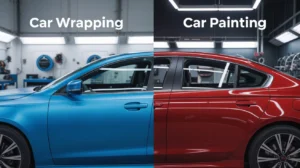
Car wrapping involves covering your car’s original paint with a thin, flexible vinyl film. This film can be:
- Solid color
- Matte, gloss, satin
- Carbon fiber
- Chrome
- Custom graphics or designs
The wrap sticks to the paint without damaging it and can be removed later.
Think of it like a skin for your car.
What Is Car Painting?
Car painting is the traditional method of changing a vehicle’s color by sanding, priming, and applying layers of paint, followed by clear coat. Once painted, the change is permanent unless repainted again.
It’s more like rewriting your car’s identity.
Car Wrapping vs. Car Painting: Feature-by-Feature Comparison
Let’s dive into the real differences.
1. Appearance and Customization
Car Wrapping – Features
Car wrapping offers unmatched customization.
You can choose:
- Hundreds of colors
- Textures like matte, satin, chrome, brushed metal
- Custom logos, patterns, or branding
- Partial wraps (roof, hood, mirrors)
Want a matte black car today and a metallic blue next year? No problem.
Advantages
- Endless design options
- Unique finishes not possible with paint
- Ideal for branding and advertising
- Easy to stand out
Disadvantages
- Extremely cheap wraps may look fake
- Finish depends heavily on installer skill
Car Painting – Features
Painting focuses more on depth and originality.
High-quality paint jobs can deliver:
- Deep gloss
- Factory-like finish
- Smooth color transitions
Advantages
- Premium, natural look
- Perfect for classic cars
- Seamless finish
Disadvantages
- Limited texture options
- Custom effects increase cost significantly
Verdict (Appearance):
If creativity and variety matter, car wrapping wins.
If you want a timeless, factory-quality finish, painting shines.
2. Cost Comparison
Car Wrapping Cost
The price of car wrapping varies based on:
- Car size
- Vinyl quality
- Design complexity
Typical cost range:
- Economy wrap: Low to medium
- Premium wrap: Medium to high
Advantages
- Usually cheaper than a high-end paint job
- Partial wraps reduce cost
- No need for repainting original car
Disadvantages
- Premium wraps can be expensive
- Needs replacement after a few years
Car Painting Cost
Painting can be affordable or extremely expensive.
Cost depends on:
- Paint quality
- Preparation work
- Labor time
- Custom finishes
Advantages
- One-time investment
- Long-lasting when done properly
Disadvantages
- High-quality paint jobs are costly
- Cheap paint jobs fade and peel quickly
Verdict (Cost):
For most modern cars, wrapping is more budget-friendly.
For long-term ownership, painting can make sense.
3. Durability and Lifespan
Car Wrapping Durability
A good quality wrap lasts:
- 3–5 years (average)
- Up to 7 years with care
Factors affecting lifespan
- Sun exposure
- Weather conditions
- Maintenance habits
Advantages
- Protects original paint from UV, scratches, and chips
- Easy to replace damaged sections
Disadvantages
- Shorter lifespan than paint
- Can peel if poorly installed
Car Painting Durability
A quality paint job can last:
- 10+ years
Advantages
- Extremely durable
- No edges or seams
- Resistant to peeling
Disadvantages
- Chips and scratches are permanent
- Repairs can be costly
Verdict (Durability):
For long-term durability, painting wins.
For protective flexibility, wrapping is better.
4. Protection of Original Paint
This is where the car wrapping vs. car painting debate becomes interesting.
Car Wrapping Protection
Vinyl wrap acts as a shield.
Advantages
- Protects against UV damage
- Guards against minor scratches
- Preserves factory paint underneath
Disadvantages
- Traps moisture if installed incorrectly
- Not designed for heavy impact protection
Car Painting Protection
Painting replaces the original paint entirely.
Advantages
- Fresh surface
- No risk of trapped moisture
Disadvantages
- Original paint is lost forever
- Lower resale value in some markets
Verdict (Protection):
If preserving original paint matters, wrapping is the clear winner.
5. Installation Time
Car Wrapping Time
- 1 to 3 days on average
Advantages
- Fast process
- No long curing time
- Get your car back quickly
Disadvantages
- Rushed jobs affect quality
Car Painting Time
- 1 to 3 weeks (sometimes longer)
Advantages
- Thorough process
- Deep finish
Disadvantages
- Long downtime
- Multiple curing stages
Verdict (Time):
If speed matters, car wrapping is far superior.
6. Maintenance and Care
Car Wrapping Maintenance
Needs:
- Gentle washing
- No harsh chemicals
- Shade parking preferred
Advantages
- Easy to clean
- No polishing required
Disadvantages
- Sensitive to heat and chemicals
- Matte wraps need extra care
Car Painting Maintenance
Needs:
- Regular washing
- Polishing and waxing
- Scratch repairs
Advantages
- Can be polished and corrected
- More forgiving
Disadvantages
- Maintenance costs over time
- Paint correction is expensive
Verdict (Maintenance):
Wraps are easier daily, paints are easier long-term.
7. Resale Value Impact
Car Wrapping and Resale
Advantages
- Original paint stays intact
- Wrap can be removed before selling
- Buyers trust factory paint
Disadvantages
- Poor-quality wrap raises suspicion
Car Painting and Resale
Advantages
- Fresh paint attracts buyers if done professionally
Disadvantages
- Color changes reduce resale value
- Buyers may suspect accident history
Verdict (Resale):
Wrapping generally protects resale value better.
8. Environmental Impact
Car Wrapping
Pros
- Less chemical waste
- No paint fumes
- Removable material
Cons
- Vinyl waste if not recycled
Car Painting
Pros
- Long-lasting surface
Cons
- Paint fumes
- Chemical runoff
- Environmental regulations
Verdict (Eco Impact):
Car wrapping is more environmentally friendly.
9. Repair and Damage Handling
Wrap Repair
- Small sections can be replaced
- Lower repair cost
- Faster fix
Paint Repair
- Requires sanding and repainting
- Color matching issues
- Higher cost
Verdict:
Wraps are easier and cheaper to repair.
When Should You Choose Car Wrapping?
Car wrapping is ideal if:
- You want frequent style changes
- You care about resale value
- You run a business (branding)
- You want paint protection
- You want quick results
When Should You Choose Car Painting?
Car painting is better if:
- You want a permanent change
- You own a classic car
- You prefer a factory finish
- You plan long-term ownership
Car Wrapping vs. Car Painting: Final Comparison Table
| Factor | Car Wrapping | Car Painting |
| Cost | Medium | Medium–High |
| Customization | Very High | Limited |
| Lifespan | 3–7 Years | 10+ Years |
| Installation Time | 1–3 Days | 1–3 Weeks |
| Paint Protection | Excellent | None |
| Resale Value | High | Can decrease |
| Maintenance | Easy | Moderate |
| Reversibility | Yes | No |
Final Thoughts: Which One Is Right for You?
The debate of car wrapping vs. car painting doesn’t have a single winner—because the right choice depends on your goals.
If you see your car as an evolving expression of style, branding, or protection, car wrapping is the smarter, more flexible solution.
If you want a permanent transformation and don’t plan on changing things again, car painting delivers timeless appeal.
In today’s world, where customization, protection, and resale value matter more than ever, many car owners are leaning toward car wrapping—and for good reason.