
Colored PPF vs Clear PPF in Kuala Lumpur: Pros & Cons Guide
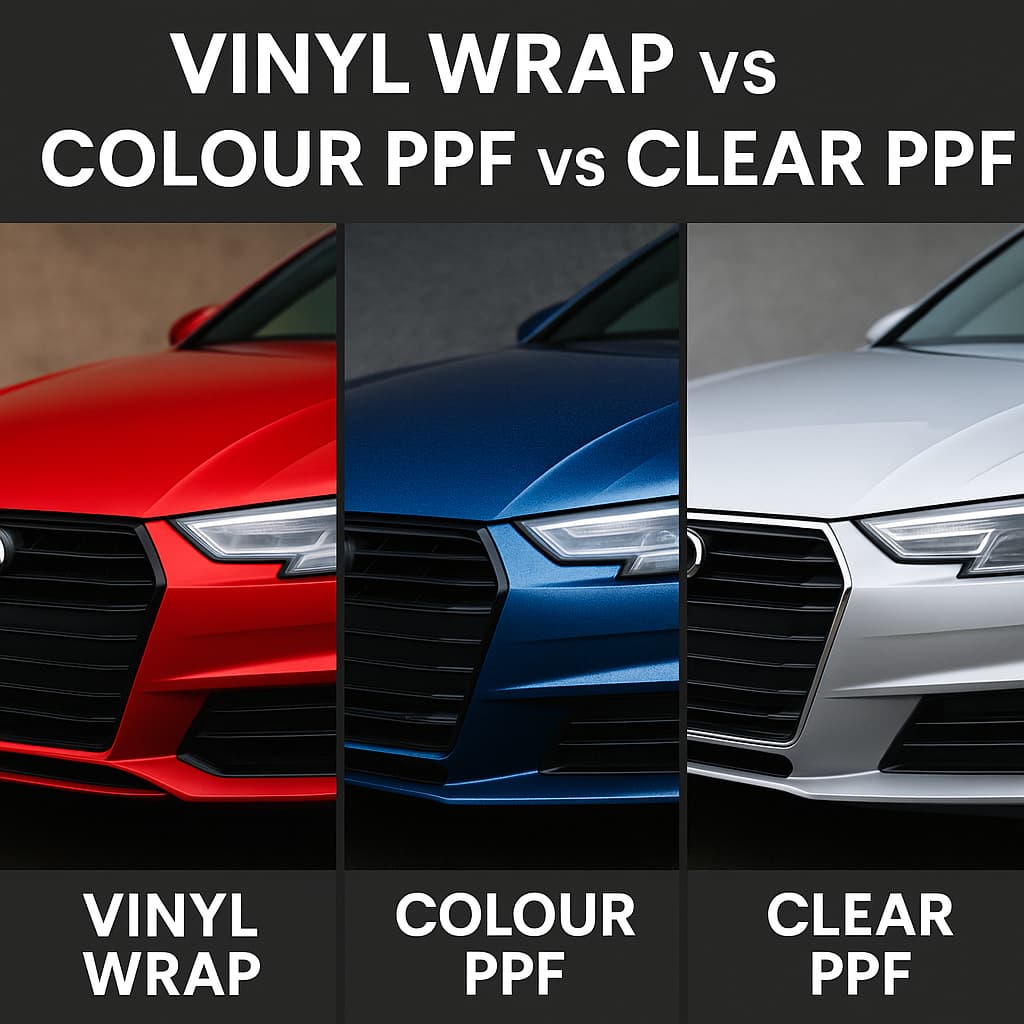
When it comes to high-end automotive defense in Klang Valley, Paint Protection Film (PPF) is the undisputed king. However, a major technological shift has hit the Kuala Lumpur detailing scene. Luxury car owners are no longer forced to choose between the invisible protection of a standard Clear PPF or the vibrant styling of a traditional Vinyl Wrap.
Enter Colored PPF—a hybrid material that fuses the thick, heavy-duty physical defense of thermoplastic polyurethane (TPU) with deep, factory-quality paint pigments. If you have just taken delivery of a new vehicle or want to refresh your current ride, understanding the structural differences, aesthetic limits, and financial tradeoffs between Colored PPF and Clear PPF is essential.
Detailed Breakdown: Clear Paint Protection Film
Clear PPF is the classic, optically transparent armor that preserves your vehicle exactly as it rolled out of the factory showroom. It is designed to be completely invisible, letting the original metallic flake and paint depth shine through while absorbing road hazards.
### The Pros of Clear PPF
- Flawless Originality Preservation: Clear PPF keeps your vehicle 100 percent original. For rare exotic cars or specific limited-edition paint shades from manufacturers like Porsche or BMW, keeping the factory paint immaculate is the primary way to protect collector value.
- Invisible Edge Lines: Because the film is entirely transparent, any exposed edge or seams near tight panel corners remain virtually impossible to see with the naked eye.
- Easier JPJ and Insurance Alignment: Since Clear PPF does not alter the base color registration of your vehicle, you do not need to update your logbook with the Road Transport Department (JPJ) or renegotiate color changes with your automotive insurance provider.
- Lower Upfront Cost: Because the manufacturing process does not require embedding liquid paint pigments into the TPU layers, premium Clear PPF packages generally carry a lower initial price tag than colored variants.
### The Cons of Clear PPF
- Zero Style Customization: Clear PPF cannot hide existing paint defects, and it will not change the look of your vehicle. If you are bored of your car's factory color, Clear PPF offers no visual excitement.
- Reveals Underlying Paint Chips: If your car already has stone chips or deep scratches down to the primer, applying a clear film over them will simply trap and highlight those imperfections.
Detailed Breakdown: Colored Paint Protection Film
Colored PPF is an advanced material evolution. Unlike thin vinyl wraps, which are made of PVC and offer almost no rock-chip protection, Colored PPF uses a thick TPU base infused with rich color pigments, topped with a glossy or satin self-healing clear coat.
### The Pros of Colored PPF
- Paint-Like Depth and Finish: Traditional vinyl wraps often suffer from a textured texture known as orange peel. Colored PPF, however, mimics real automotive spray paint perfectly, delivering a mirror-like gloss or a perfectly smooth satin frost.
- Heavy-Duty Impact Shielding: It retains the exact same impact-absorbing thickness (typically 7.5 to 8.5 mils) as Clear PPF. It stops flying gravel on the highway, resists door dings in tight KL parking structures, and fully self-heals scratches when exposed to engine heat or the afternoon sun.
- Masks Existing Cosmetic Flaws: Because the film is completely opaque, a Colored PPF wrap entirely hides old paint fading, deep scuffs, or discoloration, instantly making an older vehicle look brand new.
- Superior Stain and Chemical Resistance: The dense top-coat technology prevents environmental contamination—like the highly acidic bird droppings or industrial fallout common in urban KL—from etching into the color layer.
### The Cons of Colored PPF
- Complex Installation and Panel Tucking: To prevent the original car color from peeking through the gaps, installers must perform extensive panel disassembly and tuck the film deep into every door jamb, trunk shut, and inner fender line.
- Visible Original Color in Engine Bays: While the exterior looks flawless, opening the hood or trunk will reveal the car's original factory color unless you pay significantly extra for full inner-jamb wrapping.
- Mandatory JPJ Color Update: Changing your car’s primary exterior color requires a formal notification process with JPJ to update your vehicle registration details, along with informing your insurance matrix.
Head-to-Head Specification Comparison
To help determine which film technology matches your lifestyle, driving habits, and budget, look at how the two options match up across key performance categories.
| Performance Metric | Clear PPF (Gloss or Matte) | Advanced Colored PPF |
|---|---|---|
| Primary Objective | Absolute paint preservation. | Total color transformation with defense. |
| Material Composition | Pure aliphatic TPU layer. | Pigment-infused TPU composite. |
| Thickness Protection | 7.5 to 8 mils of defense. | 8 to 8.5 mils of heavy-duty defense. |
| Scuff Masking Capability | Low (reveals underlying marks). | Absolute (completely covers paint flaws). |
| Installation Timeframe | 3 to 4 days on average. | 5 to 7 days due to deep edge tucking. |
| Bespoke Color Choices | None (keeps factory look). | Massive (satin metallics, ultra-gloss tones). |
How to Make the Right Choice for Your Vehicle
Choosing between these two premium systems comes down to analyzing your vehicle's current status and your long-term styling goals.
- Choose Clear PPF if: You own a brand-new car with flawless factory paint, you love the original color choice, and you want a worry-free, low-maintenance defense system that preserves the vehicle's stock identity for future resale.
- Choose Colored PPF if: You want to completely refresh the visual identity of your car, your current paint finish has minor aesthetic wear you want to cover up, or you were considering a color change vinyl wrap but refuse to compromise on heavy stone chip protection.