
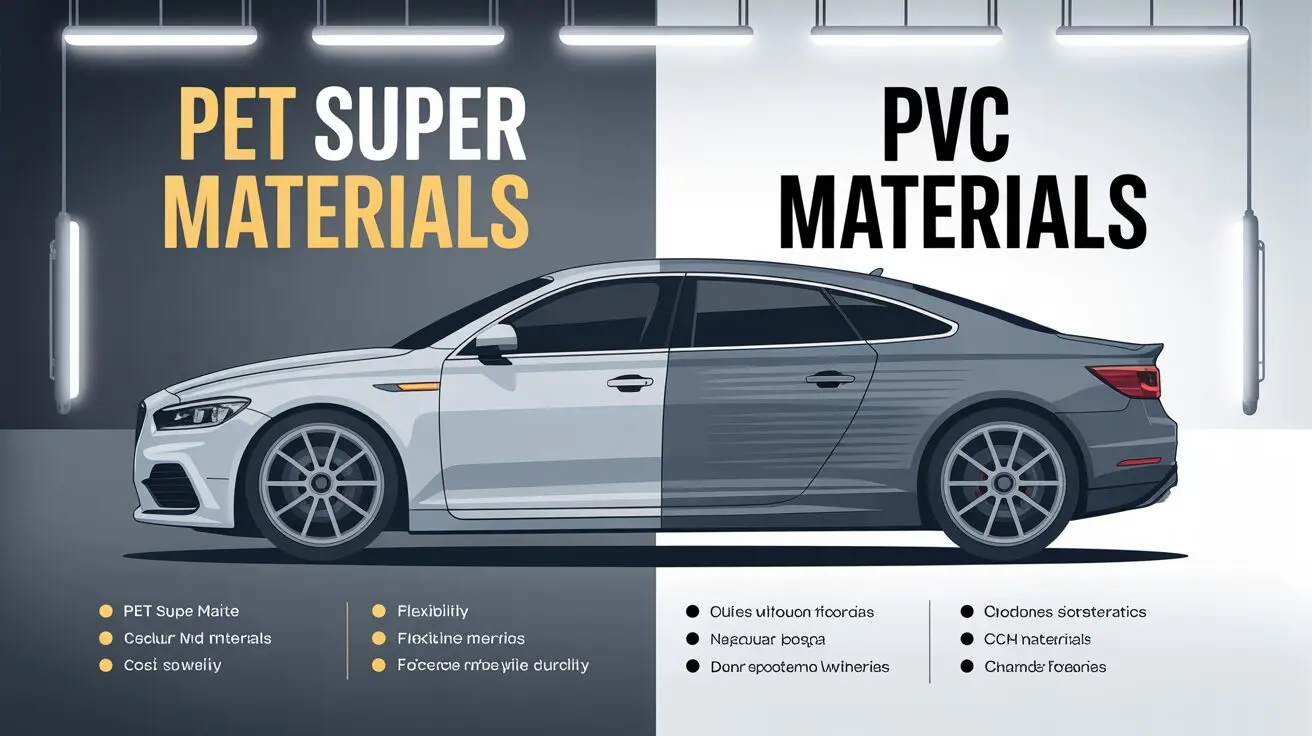
Car wrapping is a fantastic way to give your vehicle a fresh, unique look or to advertise your business with a custom design. One of the key decisions in car wrapping is choosing the right material. Two of the most popular options are PET Super Materials and PVC Materials. While both are widely used in the wrapping industry, each has its own set of characteristics, advantages, and limitations.
In this article, we will explore the differences between PET Super Materials and PVC Materials, compare their properties, and help you decide which is best suited for your car wrapping project.
What is Car Wrapping?
Car wrapping involves applying a large vinyl sheet or film to a vehicle’s surface. This film can change the appearance of the car’s color, texture, or even provide advertising space. It is a popular alternative to traditional paint, offering a variety of designs and finishes, from glossy to matte, or even textured. Car wraps are made from durable materials that can withstand outdoor conditions, including sun, rain, and dirt.
But what makes one material more suitable for wrapping than another? Let’s break down the two most common materials: PET Super Materials and PVC Materials.
What Are PET Super Materials?
PET (Polyethylene Terephthalate) is a type of plastic often used in a variety of applications, from beverage bottles to clothing fibers. However, in the world of car wrapping, PET Super Materials refer to a specialized form of PET film designed for high-performance wraps.
PET films are well-known for their excellent clarity, strength, and resistance to wear and tear. They are often used in premium wrapping films due to their ability to hold intricate designs and deliver a smooth, durable finish.
Properties of PET Super Materials:
-
Durability: PET films are highly resistant to scratches, UV radiation, and the elements. This makes them a long-lasting option for car wraps, especially in areas with harsh weather conditions.
-
Flexibility: One of the main advantages of PET films is their flexibility. This material can easily stretch and conform to the curves of a car, ensuring that every surface is covered smoothly and without wrinkles.
-
Eco-Friendliness: PET is a recyclable material, which makes it an eco-friendlier option compared to some other synthetic materials used in car wraps.
-
Color Retention: PET films retain their color over time, even when exposed to intense sunlight. This ensures that your car wrap stays vibrant for a longer period.
-
Cost: While PET materials can be more expensive than PVC, their durability and quality often justify the higher price tag.
What Are PVC Materials?
PVC (Polyvinyl Chloride) is another common material used in car wrapping, often considered the standard material in the industry. PVC wraps are widely used for both commercial and personal vehicles, offering a broad range of colors and finishes.
Properties of PVC Materials:
-
Cost-Effective: PVC materials are generally more affordable than PET films, making them an attractive option for businesses looking to wrap a fleet of cars or for individuals on a budget.
-
Ease of Use: PVC wraps are known for being easy to work with. They’re less likely to wrinkle and are more forgiving for DIY installers.
-
Durability: PVC wraps are durable but not as much as PET films. They can withstand the elements, but over time, they may show signs of fading or cracking, especially under heavy UV exposure.
-
Thickness: PVC wraps tend to be thicker than PET films, which can be an advantage in terms of providing more coverage. However, this can also make them less flexible and harder to conform to complex shapes.
-
Chemical Resistance: PVC is resistant to many chemicals, which makes it a great choice for wraps exposed to oils, fuels, and other automotive fluids.
Key Differences Between PET Super Materials and PVC Materials
Now that we know the basics of each material, let’s compare them side by side across several key categories:
1. Durability:
-
PET Super Materials: Highly durable, resistant to fading, UV damage, and scratches. They are ideal for long-term use and harsh climates.
-
PVC Materials: While durable, PVC wraps can fade or crack over time, especially when exposed to prolonged sunlight or extreme temperatures.
Winner: PET Super Materials
2. Flexibility:
-
PET Super Materials: Highly flexible, allowing them to conform well to complex curves and edges.
-
PVC Materials: Slightly less flexible, which can make them harder to apply over intricate designs or sharp curves.
Winner: PET Super Materials
3. Cost:
-
PET Super Materials: More expensive due to higher durability and quality.
-
PVC Materials: More affordable, making it an accessible option for budget-conscious individuals or businesses.
Winner: PVC Materials (for cost-conscious buyers)
4. Eco-Friendliness:
-
PET Super Materials: Recyclable, making them a better choice for environmentally-conscious buyers.
-
PVC Materials: Less environmentally friendly as they are not as easily recyclable.
Winner: PET Super Materials
5. Ease of Installation:
-
PET Super Materials: Can be trickier to install, especially for DIY enthusiasts, due to their thinner and more delicate nature.
-
PVC Materials: Easier to handle and apply, making it a go-to choice for DIY wrappers or for those looking for a quick solution.
Winner: PVC Materials
6. Color Retention:
-
PET Super Materials: Superior at maintaining color vibrancy over time, even in direct sunlight.
-
PVC Materials: Over time, PVC can lose its color and may start showing signs of fading or dullness.
Winner: PET Super Materials
Pros and Cons of Each Material
PET Super Materials:
Pros:
-
Highly durable and long-lasting
-
Excellent color retention
-
Environmentally friendly and recyclable
-
Flexible, ideal for complex curves and edges
-
Suitable for harsh weather conditions
Cons:
-
More expensive than PVC materials
-
More challenging to install, requiring professional installation in many cases
PVC Materials:
Pros:
-
More affordable
-
Easy to apply, suitable for DIY
-
Good resistance to chemicals
-
Available in a wide range of finishes and colors
Cons:
-
Less durable, prone to fading and cracking over time
-
Not as flexible, making it harder to wrap complex shapes
-
Not as eco-friendly as PET
Which Material Should You Choose for Your Car Wrap?
Choosing between PET Super Materials and PVC Materials depends largely on your needs, budget, and the level of durability required for your car wrap.
-
If you want a long-lasting, high-performance wrap that maintains its color and looks even under harsh conditions, PET Super Materials are the better choice. Although they come at a higher price, their durability and eco-friendliness make them worth the investment for those looking for a premium option.
-
If you’re on a budget, need a quick solution, or are wrapping a fleet of vehicles, PVC Materials offer a cost-effective and easy-to-apply alternative. While they may not last as long as PET wraps, they still provide excellent results for short-term projects or vehicles that don’t require long-term durability.
Conclusion
Both PET Super Materials and PVC Materials offer distinct advantages depending on your car wrapping needs. Whether you prioritize cost, ease of installation, durability, or environmental impact, understanding the differences between these two materials will help you make a more informed decision.
For those looking for the best long-term solution, PET Super Materials provide superior performance, while PVC Materials serve as a reliable, budget-friendly option for those with more immediate needs.
In the end, the choice between PET and PVC wraps comes down to your priorities. Weigh the pros and cons carefully, and choose the material that best suits your vehicle, your design, and your budget.